




Needlemat, Felt & Blankets
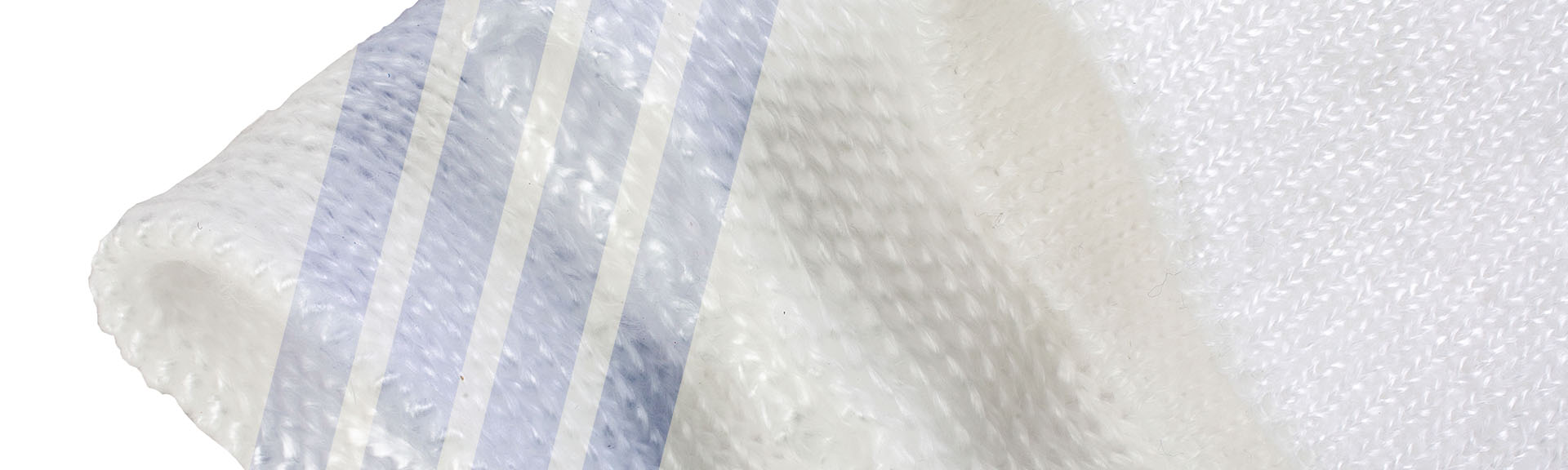
Needlemat, felts and blankets are non-woven materials. They are primarily used for insulation and fire protection across many sectors and industries, serving applications such as thermal insulation jackets, passive fire protection systems (PFP) and protective clothing, like gloves, gauntlets and hoods. They can be made from Glass, Silica, Aramid, Ceramic, Basalt and many more. Stitch bonding of a needlemat can increase dimensional stability and uniformity.
Types of Needlemat and Felts
Glass Needlemat
- Temperate resistance: 550°C
- Made from 100% E-glass fibres
- Available in various densities from 120kg/m3 to 250kg/m3
- Available in thicknesses from 4mm – 25mm
Alumina Needlemat
- Temperature resistance: 1600°C
- Made from 75-97% Al2O3 fibres
- Shrinkage up to 4% at 1000°C after 1 hour
Silica Needlemat
- Temperature resistance: 1000°C
- Made from entirely silica fibre
- Available in various densities from 120kg/m3 to 250kg/m3.
- Available in thicknesses from 4mm – 25mm
- Shrinkage up to 8% at 1000°C
Aramid Needlemats and Felts
- Temperature up to 300°c.
Aramid fibres, known for their strength and heat resistance, are manufactured from materials like Nomex® (meta-aramid) or Kevlar® (para-aramid). They are often used in protective clothing as offer durable, cut resistance products.
Knitted Glass and Silica Blankets
- Glass fibre is generally manufactured from E-glass or S-glass, have great flexibility and elongation for complex structures.
- Silica fibre are made from 96%+ fibres and offer the same flexibility and elongation for complex structures like E-glass, but offer a higher temperature. Though have the draw back of shrinkage.
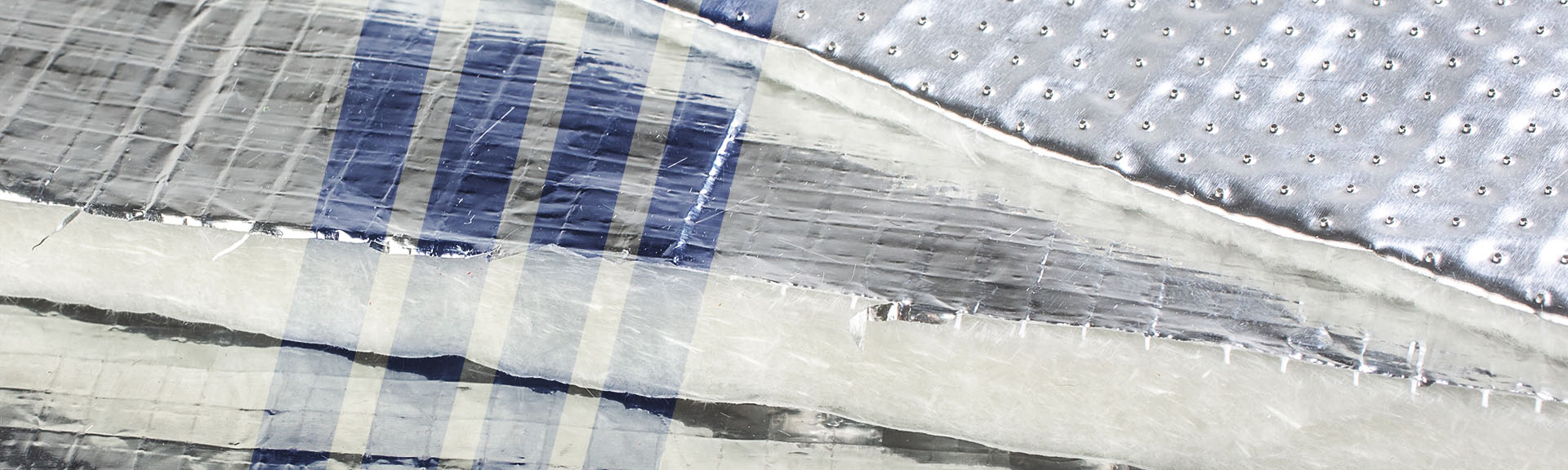
Laminated Needlemats
Temperature resistance of laminated needlemats are limited by the lowest component of the construction, usually the adhesive, in some cases between 150-250°C. They are made by bonding these needlemats, felts and blankets with other materials like foils or films, or even other fabrics and felts.
- Aluminium foil 12 µm to 100 µm available – these offer excellent vapour barriers and heat reflection properties.
- Stainless foil 50 µm to 100 µm available – these offer excellent fire protection and is used applications like jet fire protection.
Stitch Bonded Non Woven Fabric
Temperature resistance up to 550°c-750°c
During the manufacturing process of needlemat, the density is determined by the % content of raw, chopped fibres with a diameter of 6-13 µm, these fibres are blown in layers onto a continuous production line to meet the desired weight per m2 or kg/m3. The bulky, low-density layers then pass through rollers and banks of reciprocating needles, which punch the fibres repeatably until it has met the desired thickness.
Stich Bonding Non Woven Process
The process of stitchbonding is done as a secondary process, where the finished needled blanket undergoes the additional process of stitching or quilting, this increases the products dimensional stability and uniformity. As the surface of standard needlemat is very fibrous, the additional stitching or quilting creates a much flatter surface which shows some benefit compared to needled-only needletmat, if laminated with a foil the bond between the two layers is greater.
Stitch bonded needlemat is only available on needlemats up to 12mm thicknesses.
Glass fibre needlemat can be made from a number of different glass fibre grades, including:
- E-Glass
- A-Glass
- S-Glass
For more information on skin irritation and how to manage itching caused by glass fibre, please refer to our FAQs on glass fibre itching.
Can't find what you are looking for? THS Textiles offers bespoke products for a range of different applications. Get in touch with us to discuss your specific requirement.
