
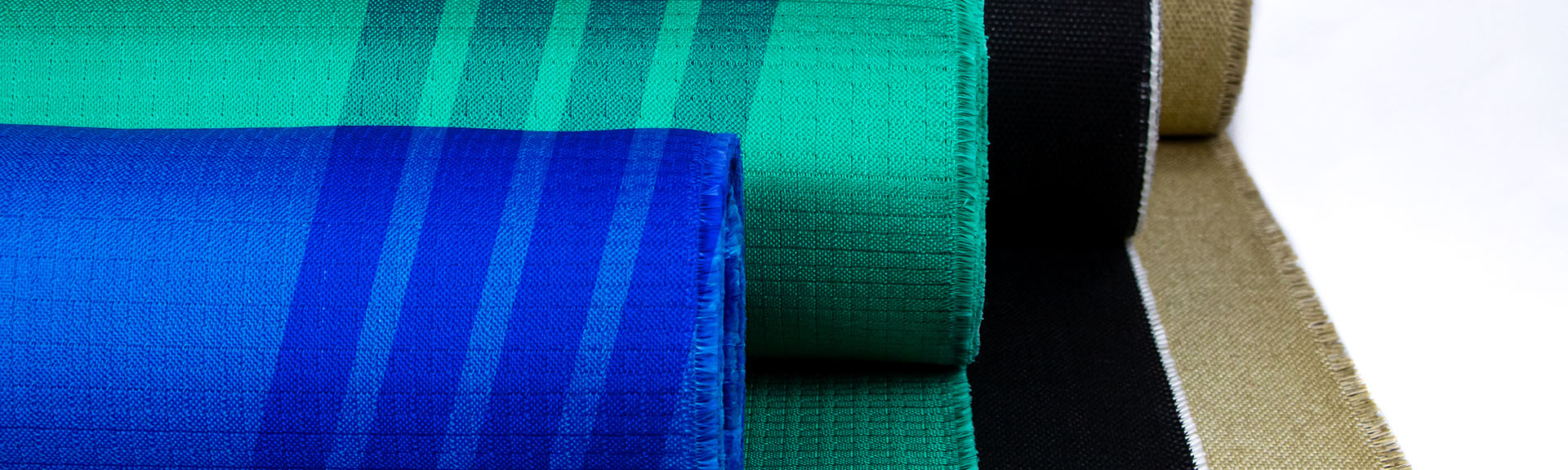
Dipped Treatments
The dipped treatments are used to add different properties to the coatings, these are:
- Weave locking and stiffening ? fray reduction
- Increased temperature resistance
- Increases flexing resistance at high temperature
- Adhesion promoters
- Ability to withstand molten metal
- Dying and colouring

Theoretically, it is possible to apply any dip treatment to any fabric, although not common practice, which could be for a multitude of reasons, contact us to discuss specific requirements.
Calcium Silicate
Temperature resistance: up to 700?C
Calcium Silicate coats and protects the fibres giving them increased temperature resistance over extended periods, possible to produce in a range of different colours.
Graphite
Temperature resistance: up to 650?C
Graphite on Woven Glass: The graphite solution not only increases temperature resistance, but also gives increased resistance to flexing, especially useful in flexible connectors, fabric expansion joints and compensators.
Graphite on Woven Silica: The graphite solution stabilises the silica fibres, and gives increased resistance to flexing at high temperatures.
Silane & Other Adhesion Promoters
Adhesion promoters can be required to help certain rubbers and resins bond to the relatively smooth surface of glass fibres, nylon/polyester fibres and some aramid fibres. A wide variety of specific compounds are available, so please call us to discuss any specific requirements.
Silica Wash
Temperature resistance: up to 750?C
Amorphous silicate dispersion coats and protects the fibres giving them increased temperature resistance over extended periods, possible to produce in a range of different colours.
Vermiculite (Weldblock)
THS vermiculite coated fabrics became known as WELDBLOCK
Temperature resistance: up to 1000?C
Vermiculite treatments are most common on Glass or Silica fibre fabrics, this treatment can perform at temperatures up to 1000?c on a one-off basis. It’s particular niche is welding blankets, being able to withstand molten metal. It also increases its abrasion resistance, locking the fibres.
Weavelock
Temperature resistance: up to 150?C
Usually a fire-retardant acrylic finish, which stabiles the fibres and reduces fraying, available in a range of colours and varying thicknesses. Glass cloth with a weavelock finish is often referred to as ?plain glass cloth?.